Introduction
In modern industries, socket fittings must withstand high pressure, stress, and corrosion. An MS (mild steel) forged socket offers mechanical strength, structural consistency, and long service life. At Fortis Forge, we combine tradition with data‑driven optimisation to deliver sockets that perform reliably in critical systems.
In this post, I explain what an MS forged socket is, why forging matters, how we manufacture it, what tests we do, and where these sockets find use.
What Is an MS Forged Socket?
An MS forged socket is a connector piece made of mild steel. It is shaped under high pressure forging rather than cast or welded. The forging process aligns internal grain, giving the socket stronger mechanical properties and better fatigue resistance.
The “socket” typically means one end is recessed to accept another pipe or fitting. It acts as a union, coupling, or joining element in pipelines, instrumentation systems, or fluid control systems.
Why Forged Over Cast or Welded?
Using forging instead of casting or welding gives multiple advantages:
Grain continuity: forging aligns metal grains along the load paths, increasing tensile strength and fatigue resistance.
Lower porosity: forging reduces internal voids vs cast parts.
Better mechanical integrity: forged parts resist cracks or weak zones.
Consistent dimensions: modern forging plus finishing yields tight tolerances.
Reduced welding weaknesses: You avoid welded joints that might be failure points under stress or vibration.
These traits make a forged socket ideal for demanding applications like oil & gas, power, or chemical plants.
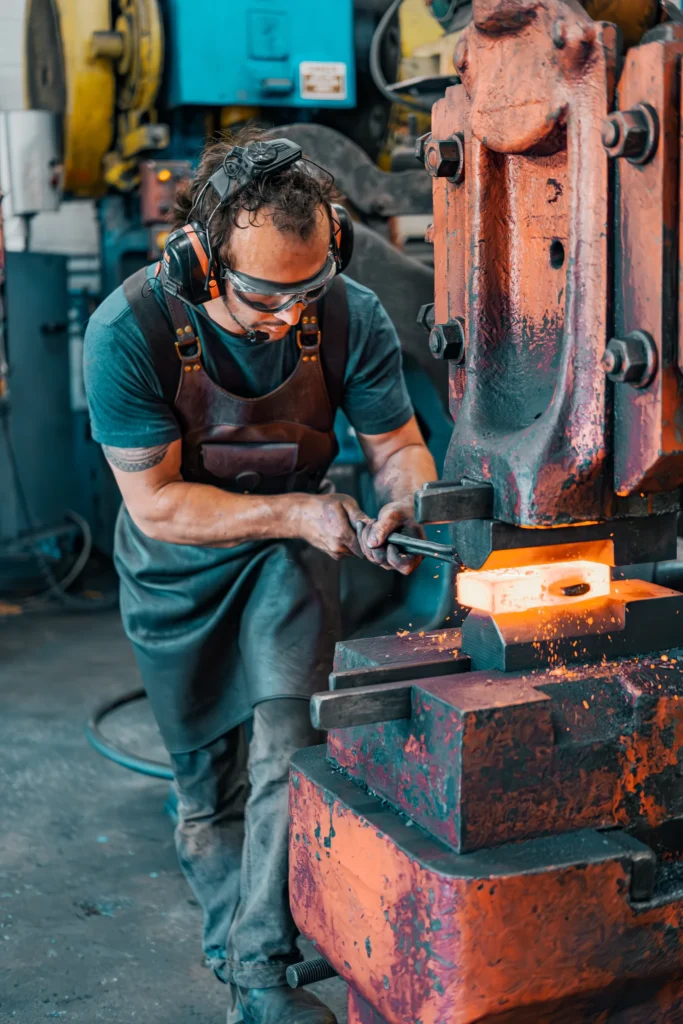
Manufacturing Process (Step‑by‑Step)
Here’s a breakdown of the typical forging process for MS sockets at Fortis Forge:
| Step | Description |
|---|---|
| 1. Raw material receipt & inspection | We source certified mild steel bars or billets. Chemical and mechanical tests verify specifications. |
| 2. Cutting / preforming | The bars are cut to approximate length for forging. Preform shapes reduce extra work. |
| 3. Heating | Use induction or gas-fired furnaces to raise temperature uniformly (e.g., ~1100–1250 °C) |
| 4. Forging / forming | Using a hydraulic or mechanical press, the preheated blank is pressed into dies to get socket shape. |
| 5. Piercing / punching | Create internal cavities or recesses in the socket core, if needed. |
| 6. Trimming / flash removal |  Quality Control & TestingQuality is critical for socket fittings. At Fortis Forge, we perform:
 Applications & BenefitsApplications
Benefits
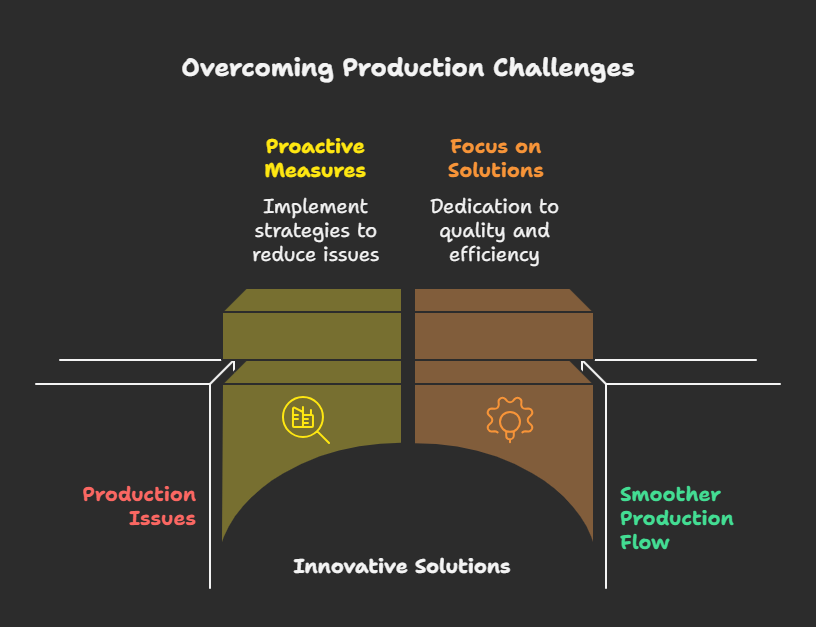
Challenges & MitigationsForging MS sockets is not without challenges:
 Future Trends & Innovations
Fortis Forge aims to stay ahead by pilot testing smart socket integration and generative forging designs. Conclusion & Call to ActionAn MS forged socket offers unmatched strength, reliability, and longevity for demanding industrial systems. With Fortis Forge’s integration of Napkin AI tools, we raise quality, reduce defects, and maintain full traceability. If you are planning a pipeline, instrumentation, or fluid control project, contact Fortis Forge. We deliver customized MS forged sockets, backed by data, design, and quality assurance. Call to Action: Request a quote, review our product catalog, or schedule a technical consultation today. Send messageForge a Connection with UsLet’s start building something strong together. Reach out to Fortis Forge for reliable solutions in forged fittings, buttweld fittings, and carbon steel flanges. Whether it’s a custom requirement or a bulk order, our team is ready to support your industrial needs. HyderabadMUMBAIWarehouse - BHIWANDIPowered by Fortis Forge. Designed & Developed by Skytech SEO Solutions |