Introduction
Forged carbon steel pipe fittings are vital in industries that demand strength and durability. These fittings connect, control, and support pipelines under extreme conditions. At Fortis Forge, we focus on producing high-quality forged carbon steel fittings designed for long-term performance.
This blog explores their manufacturing process, features, advantages, and applications. We also provide SEO insights and readability analysis for better visibility online.
What Are Forged Carbon Steel Pipe Fittings?
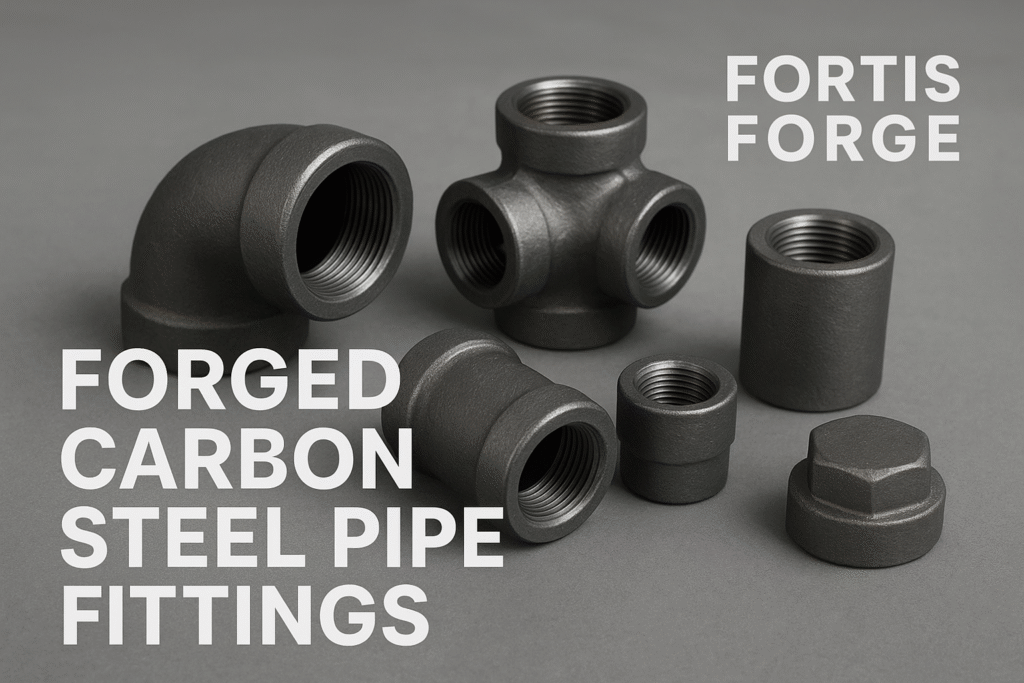
Forged carbon steel fittings are shaped using a forging process. This process applies heat and pressure to steel billets, creating dense and strong fittings.
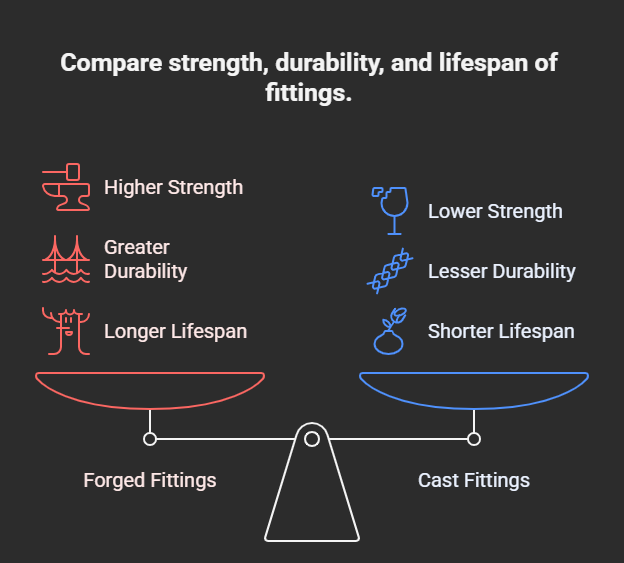
Unlike cast fittings, forged fittings have a refined grain structure. This makes them ideal for high-pressure and high-temperature applications.
Key Features of Forged Carbon Steel Fittings
High tensile strength for pressure pipelines.
Excellent resistance to mechanical stress.
Longer life compared to cast fittings.
Availability in multiple shapes and sizes.
Compliance with international standards.
Manufacturing Process at Fortis Forge
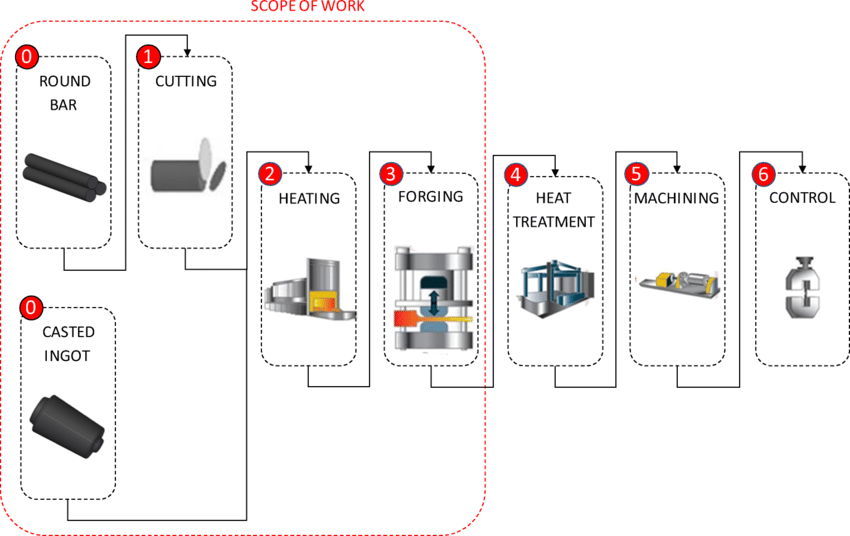
The manufacturing of forged fittings involves several steps:
Material Selection – High-quality carbon steel billets are sourced.
Heating – Billets are heated to forging temperature.
Forging – Hydraulic presses shape billets into fittings.
Heat Treatment – Enhances toughness and hardness.
Machining – Precision machining ensures accurate dimensions.
Inspection – Non-destructive tests ensure zero defects.
Types of Forged Carbon Steel Pipe Fittings
Fortis Forge manufactures a wide range of forged fittings:
Elbows – Change the direction of the flow.
Tees – Divide or combine fluid flow.
Couplings – Connect two pipes.
Unions – Allow easy disconnection of pipes.
Caps – Close pipeline ends.
Cross fittings – Divide flow in four directions.
Advantages of Forged Carbon Steel Pipe Fittings
Forged fittings offer several benefits:
High durability under pressure.
Better fatigue resistance.
Leak-proof connections.
Cost-effective in long-term operations.
Suitable for aggressive environments.
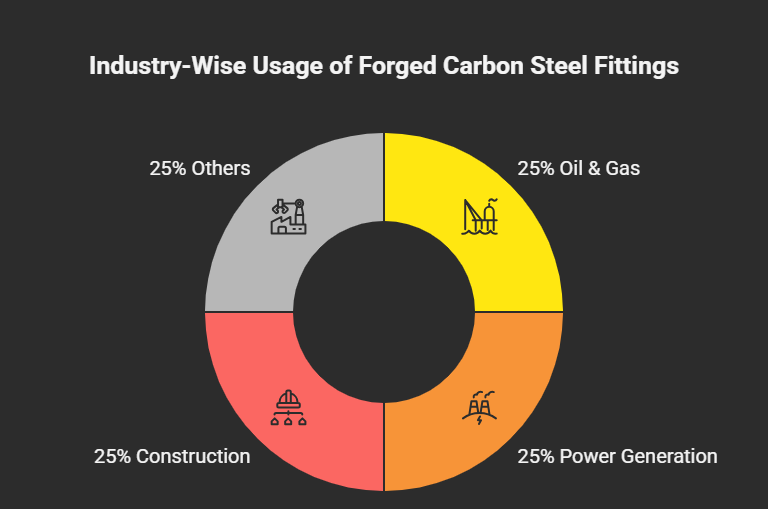
Applications Across Industries
Forged carbon steel pipe fittings play a critical role in many sectors:
Oil and Gas – Pipelines for drilling and refining.
Petrochemical – Processing plants and chemical flow systems.
Power Generation – Boilers and turbine systems.
Shipbuilding – Marine pipelines and structural systems.
Construction – Heavy-duty piping infrastructure.
Why Choose Fortis Forge ?
At Fortis Forge, we ensure every product meets strict quality standards. Our team uses advanced forging technology to produce fittings that exceed customer expectations.
Key reasons to choose us:
ISO-certified manufacturing process.
Global supply network.
Customization options for unique projects.
Competitive pricing without compromising quality.
Common Challenges and Solutions
Even forged fittings face challenges. Fortis Forge addresses them effectively:
Corrosion: Anti-corrosion coatings applied.
Stress Cracking: Heat treatments improve toughness.
Supply Delays: Strong inventory management ensures timely delivery.
Global Market Insights
The demand for forged carbon steel fittings is rising globally.
The oil and gas sector drives 40% of the demand.
Asia-Pacific is the fastest-growing region.
Sustainability trends encourage durable fittings like forged steel.
Future of Forged Carbon Steel Pipe Fittings
The future is promising with rising infrastructure and energy projects. Advanced forging techniques will create stronger and more eco-friendly fittings.
Fortis Forge is investing in innovation to lead this transformation.
Conclusion
Forged carbon steel pipe fittings are essential for reliable and safe piping systems. Their strength, durability, and adaptability make them the preferred choice across industries.
At Fortis Forge, we remain committed to delivering world-class forged fittings that power global industries.