Introduction
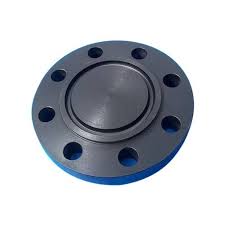
Flanges are essential in piping systems. They connect pipes, valves, pumps, and other equipment. Among them, the a105 blind flange holds a special role. Unlike other flanges, it has no opening. It seals off the pipeline end.
The A105 grade is a carbon steel specification under ASTM standards. This grade ensures strength, durability, and heat resistance. Fortis Forge manufactures A105 blind flanges that comply with global quality benchmarks.
This blog explores the types, uses, standards, and benefits of A105 blind flanges.
What Is an A105 Blind Flange?
An A105 blind flange is a circular plate used to close the end of a piping system. It has bolt holes around the rim but no central bore.
Key characteristics:
Made from forged carbon steel.
Used for high-pressure and high-temperature applications.
Provides easy access for inspection or system modification.
Blind flanges are removable. This feature makes them ideal for pipelines requiring regular maintenance.
Types of A105 Blind Flanges
1. Raised Face Blind Flange
Has a small raised area around the sealing face.
Provides a tight, secure connection.
Common in chemical and petrochemical plants.
2. Flat Face Blind Flange
Has a flat sealing surface.
Used with cast iron and low-pressure systems.
Prevents flange bending under stress.
3. Ring-Type Joint Blind Flange
Uses a metal ring for sealing.
Suitable for high-pressure applications.
Provides leak-proof performance.
4. Custom Machined Blind Flanges
Designed for specific requirements.
Available in special thicknesses and materials.
Used in industries with unique standards.
Standards for A105 Blind Flanges
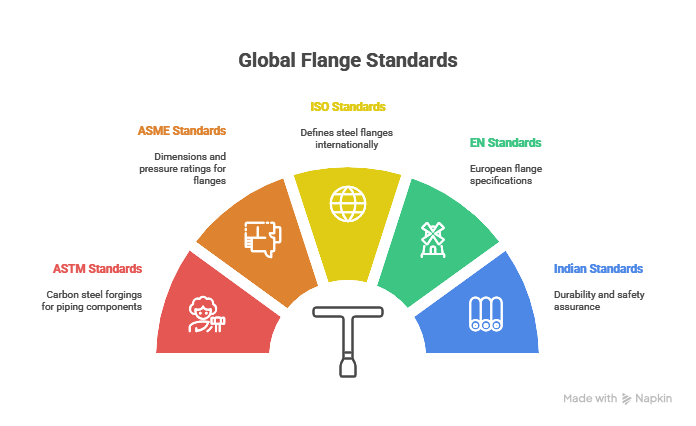
ASTM Standards
ASTM A105 – Carbon steel forgings for piping components.
ASTM A350 LF2 – Alternative for low-temperature service.
ASME Standards
ASME B16.5 – Pipe flange dimensions and pressure ratings.
ASME B16.47 – Large diameter flange specifications.
International Standards
ISO 7005 – Defines steel flanges.
EN 1092-1 – European flange standard.
Indian Standards
ISI Certified Flanges – Durability and safety assurance.
BIS Codes – Cover testing, performance, and quality
Manufacturing Process of A105 Blind Flanges
Raw Material Selection – Choose high-quality carbon steel.
Forging Process – Heat and shape the steel into flanges.
Machining – Drill bolt holes and shape sealing surfaces.
Heat Treatment – Improve toughness and durability.
Testing – Inspect flanges for cracks, pressure, and strength.
Fortis Forge ensures every A105 blind flange passes strict quality inspections before delivery.
Installation and Best Practices
Align flange bolt holes properly.
Use suitable gaskets for sealing.
Tighten bolts in a crisscross sequence.
Conduct hydrostatic testing before use.
Re-inspect connections after operation.
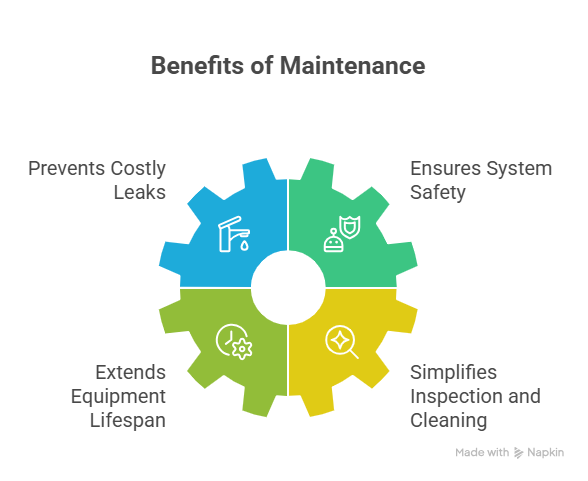
Maintenance Benefits
Prevents costly leaks.
Ensures system safety.
Extends equipment lifespan.
Simplifies inspection and cleaning.
Advantages of Choosing Fortis Forge
Precision manufacturing with advanced machines.
Compliance with ASTM, ASME, and ISO standards.
Proven performance in global projects.
Customization options available on request.
By choosing Fortis Forge, industries gain reliable and cost-effective flange solutions.
Conclusion
The A105 blind flange is a vital component in pipelines. It ensures sealing, safety, and easy access for inspection.
Its durability, pressure handling, and compliance with international standards make it highly reliable. Fortis Forge manufactures high-quality A105 blind flanges trusted by industries worldwide.
Investing in certified blind flanges guarantees performance, safety, and long service life.