Introduction
In the demanding world of infrastructure, construction, fire safety, and plumbing, one of the most persistent challenges is corrosion. It eats away at metal fittings, causes leaks, reduces efficiency, and increases maintenance expenses. This is where GI Hot Dip Fittings (galvanized iron fittings) stand out as a time-tested, high-performance solution.
Manufactured using a process that coats steel or iron with a thick layer of zinc, it offers exceptional corrosion resistance, extended service life, and cost efficiency over the long term. These fittings are not just protective; they’re durable, economical, and widely used across sectors from agriculture to high-rise buildings.
This guide explains everything you need to know about what they are, how manufacturers make them, where they shine, and why industries worldwide trust them for reliable piping systems.
Whether you’re an engineer, contractor, or procurement manager, by the end of this blog, you’ll know exactly why they are worth the investment and how to use them smartly in your projects.

What are they?
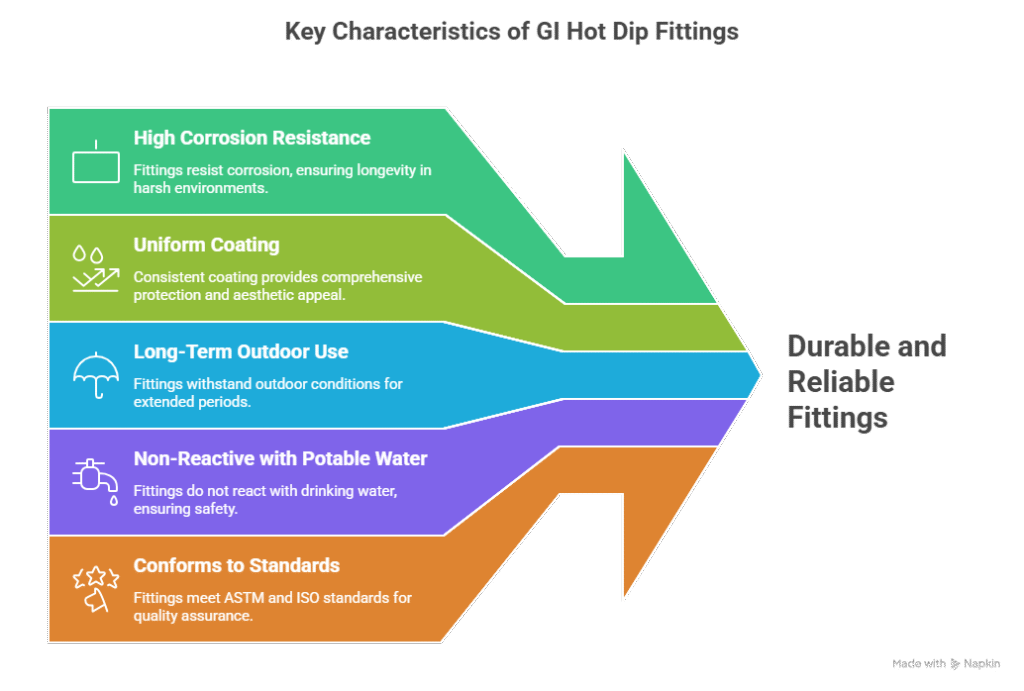
Galvanized iron pipe fittings undergo coating through the hot-dip galvanization process, where manufacturers submerge steel or iron in molten zinc to form a corrosion-resistant layer. This layer bonds metallurgically with the base metal, creating a durable barrier that resists oxidation, rust, and environmental damage.
Industries use these GI hot dip fittings to connect, redirect, extend, or terminate piping systems, applying them widely in plumbing, irrigation, industrial pipelines, HVAC systems, and fire protection networks.
The Advantages
What sets hot-dip galvanized fittings apart from standard black or electro-galvanized ones is the thickness and durability of the zinc coating:
Hot-dip galvanization: 50–150 μm coating
Electro-galvanization: 2–25 μm coating
Black iron fittings: No coating
This difference significantly impacts how the fittings perform over time, especially in humid, coastal, or underground environments. The hot-dip layer provides sacrificial protection, meaning the zinc corrodes first, protecting the underlying steel.
Manufacturing process
Their reliability begins with the way manufacturers make them. The hot-dip galvanization process goes beyond simply dipping steel into molten zinc; it follows a carefully controlled procedure that ensures uniform coating, strong adhesion, and maximum protection.
Here’s a step-by-step breakdown of how these fittings are manufactured:
1. Surface Cleaning and Preparation
Before coating, the iron or steel fittings undergo a multi-step cleaning process to remove grease, oil, rust, and scale. This involves:
Degreasing—removal of organic contaminants
Pickling—acid treatment to strip off mill scale and rust
Rinsing—to eliminate acid residue
Note: If the surface isn’t 100% clean, the zinc won’t bond properly compromising corrosion resistance.
2. Fluxing
Next, the fittings are dipped into a flux solution (usually zinc ammonium chloride), which prevents oxidation before galvanization. This step ensures that the surface remains reactive and ready for coating.
3. Hot-Dip Galvanization
This is the heart of the process. The fittings are immersed in a bath of molten zinc at ~450°C (840°F). During this stage:
Zinc forms a series of zinc-iron alloy layers with the base metal
A final pure zinc layer forms on the exterior, providing the silvery finish
The result is a metallurgically bonded coating that’s much tougher than paint or electroplating
4. Cooling & Quenching
After dipping, the fittings are cooled either in open air or in a water-based quench solution. This solidifies the zinc layer and stops the galvanic reaction.
5. Inspection & Testing
Every batch of fittings undergoes quality control checks for:
Coating thickness
Adhesion
Surface finish
Thread accuracy
Products that pass are stamped or labeled according to industry standards (ASTM, ISO, etc.).
Types
They come in a variety of shapes and configurations, each designed to fulfill specific functions within piping systems. Common types include elbows, which change the direction of piping typically at 45° or 90° angles; tees, used to split or combine flow between three pipe sections; reducers, which connect pipes of different diameters to maintain system compatibility; couplings, designed to join two pipes of the same size securely; and end caps, which seal off the ends of pipes to prevent leaks or contamination.
These fittings are manufactured in various sizes to accommodate different piping requirements and pressures, making them highly versatile for applications ranging from residential plumbing to industrial pipelines and fire protection systems. The uniform zinc coating of these fittings not only ensures durability but also maintains consistent protection across complex assemblies, making them reliable components for long-term, corrosion-resistant installations.
GI Hot Dip Fittings vs Other Types
Applications
GI Hot Dip Fittings serve a wide spectrum of industries and infrastructure projects because they deliver strength, durability, and corrosion resistance. In the construction and plumbing sector, contractors install them in water distribution systems both above ground and underground, where moisture and temperature changes would quickly degrade unprotected fittings. Fire protection systems also rely on them, especially in fire sprinkler pipelines, where they meet fire codes and ensure long-term reliability. In industrial environments such as chemical processing plants and manufacturing units, operators use GI fittings in pipelines that transport fluids or gases under pressure, particularly in corrosive atmospheres.
Agricultural applications, including irrigation systems and water storage networks, also benefit from their resistance to soil acidity and wet conditions. In HVAC and mechanical systems, engineers frequently use GI reducers, elbows, and tees for air and fluid movement. Their ability to perform well in coastal or high-humidity environments makes them suitable for marine and offshore installations as well. Whether installed in a residential building, a commercial facility, or an industrial plant, these fittings provide a long-lasting, maintenance-friendly solution for secure, rust-resistant pipe connections.
Installation Tips
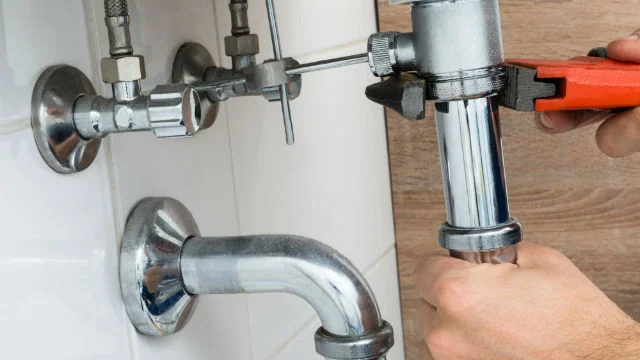
Proper installation is essential to ensure long-term performance and to fully benefit from their corrosion-resistant properties. One of the most important tips is to always apply a quality thread sealant, such as PTFE tape or pipe joint compound, to ensure leak-proof connections and to prevent galling during tightening. It’s also crucial to avoid over-tightening, as the zinc coating on the threads is softer than the base steel — excessive torque can damage the threads or strip the protective layer, reducing the fitting’s corrosion resistance.
Before installation, always inspect the threads for any excess zinc buildup or debris, and clean them if necessary to ensure a proper fit. In systems where fittings will be exposed to moisture continuously or buried underground, it’s recommended to wrap joints with an additional corrosion protection layer, such as bitumen tape or a protective sleeve.
Installers should also ensure proper alignment and support for pipe runs to reduce stress on the fittings. Lastly, when cutting or threading GI pipe on-site, it’s important to reapply a zinc-rich coating (like cold galvanizing spray) to exposed steel surfaces, preserving the integrity of the corrosion barrier. Following these simple but essential steps will ensure they perform reliably over decades, even in the most demanding conditions.
Conclusion
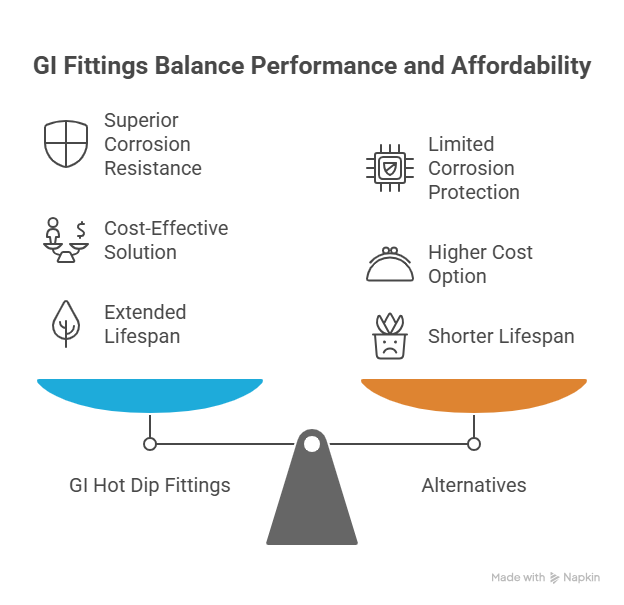
They offer an ideal balance of durability, affordability, and long-term reliability, making them a preferred choice for a wide range of piping applications. Their robust zinc coating provides exceptional protection against rust and corrosion, especially in harsh or moisture-heavy environments. From residential plumbing and fire safety systems to agricultural irrigation and industrial pipelines, these fittings deliver dependable performance with minimal maintenance. Compared to other options like electro-galvanized, black iron, or even stainless steel, hot-dip galvanized fittings consistently prove to be the smarter, more economical long-term solution.
Whether you’re a contractor, engineer, or decision-maker looking for high-quality, corrosion-resistant fittings that meet international safety standards, It offers unmatched peace of mind. By investing in them, you’re not just choosing a product — you’re choosing longevity, compliance, and cost-efficiency.