
Introduction
Sprinkler systems play a vital role in agriculture, landscaping, and fire protection. Among their essential components are sprinkler couplers. Specifically, 3 4 inch sprinkler coupler ensure reliable pipe connections and smooth water flow.
These couplers are designed to handle high pressure, resist corrosion, and maintain water efficiency. Selecting the right type improves system performance and reduces maintenance costs. Companies like Fortis Forge provide durable couplers built for long-term reliability.
This blog explains types, uses, and standards for 3–4 inch sprinkler couplers. It also highlights best practices for installation and maintenance.
What Are Sprinkler Couplers?
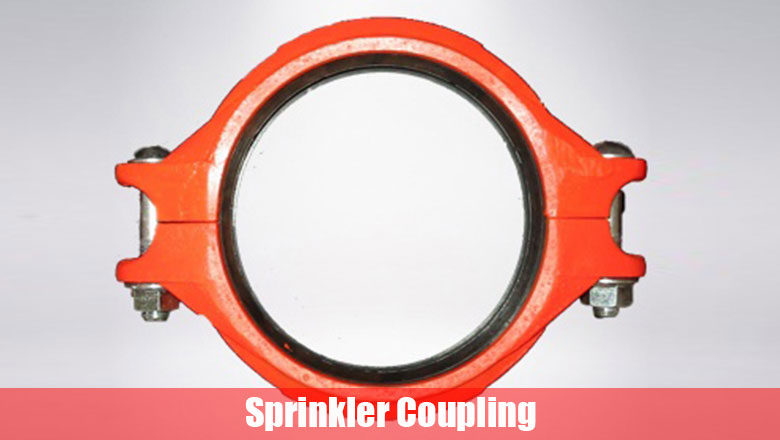
Sprinkler couplers connect two sections of pipe in an irrigation or fire system. They prevent leaks, maintain pressure, and allow quick installation.
A 3 4 inch sprinkler coupler supports medium to large systems. These are common in commercial farms, golf courses, and industrial fire protection networks.
Couplers are made from materials like PVC, brass, stainless steel, or galvanized steel. Each material offers unique advantages for specific environments.
Types of 3–4 Inch Sprinkler Couplers
1. Threaded Couplers
Threaded couplers use male and female threads to connect pipes. They are easy to install and replace.
Best for moderate-pressure applications.
Commonly used in landscaping and light irrigation systems.
2. Compression Couplers
Compression couplers rely on tightening nuts to seal connections. They reduce leakage risk and provide secure fits.
Ideal for PVC and plastic pipes.
Often used in agricultural irrigation systems.
3. Push-Fit Couplers
Push-fit couplers allow quick installation without tools. You push the pipe into place, and the mechanism locks it.
Saves labor time during large projects.
Suitable for temporary or seasonal systems.
4. Flanged Couplers
Flanged couplers use bolts and gaskets to join two pipe ends. They handle heavy-duty applications with high water pressure.
Popular in fire safety networks.
Used in large commercial irrigation systems.
5. Flexible Rubber Couplers
Flexible rubber couplers absorb vibrations and minor misalignments. They are resistant to chemical damage and UV rays.
Perfect for uneven landscapes.
Common in drainage and underground piping.
Uses of 3–4 Inch Sprinkler Couplers
Sprinkler couplers serve multiple industries:
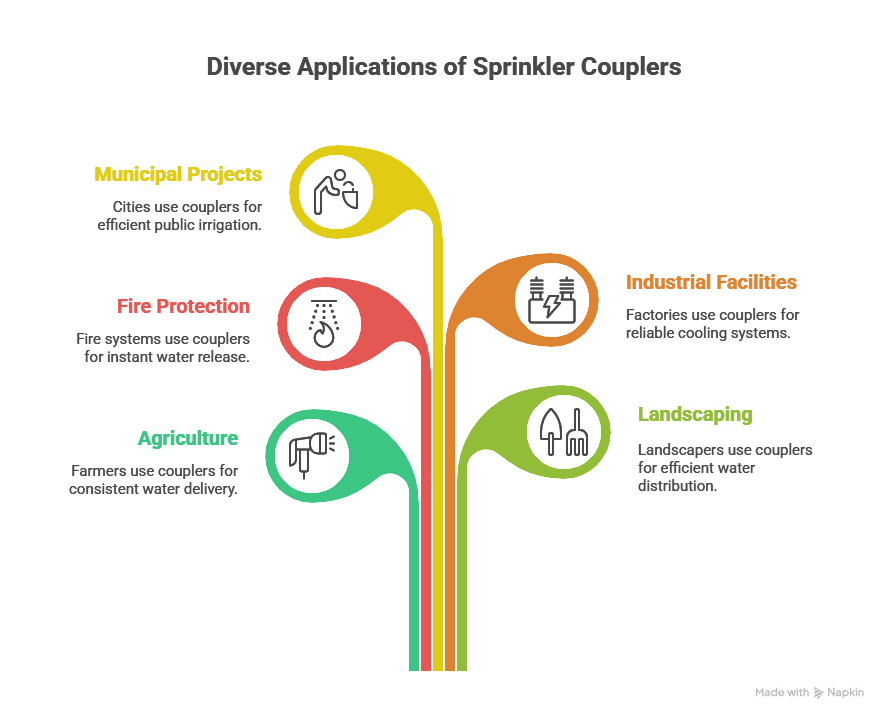
Agriculture
Farmers use couplers to connect irrigation pipelines.
They ensure consistent water delivery across large fields.
Landscaping
Landscapers rely on couplers for gardens, parks, and golf courses.
They allow efficient water distribution with minimal leaks.
Fire Protection
Fire sprinkler systems use heavy-duty couplers for safety.
They withstand high pressure and provide instant water release.
Industrial Facilities
Factories use couplers for cooling systems and dust suppression.
They ensure reliability under continuous operation.
Municipal Projects
Cities use couplers in public parks and community landscapes.
They help reduce water waste and improve irrigation efficiency.
Standards for 3–4 Inch Sprinkler Couplers
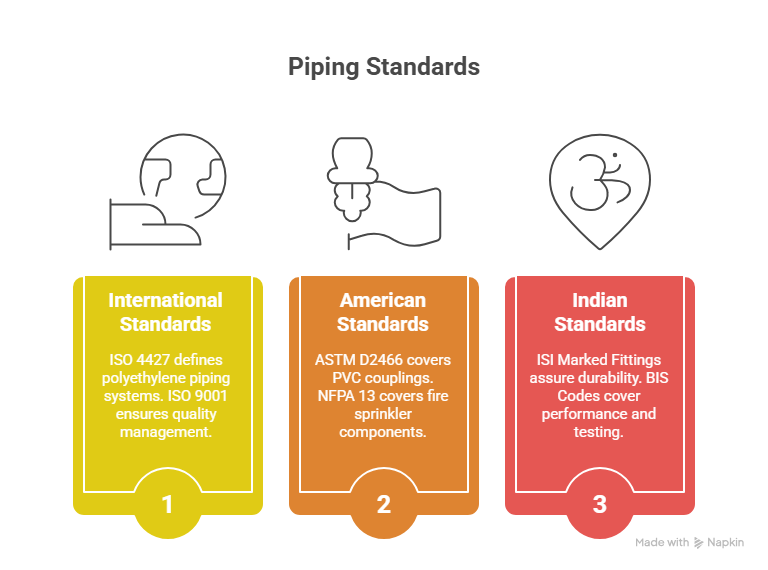
International Standards
ISO 4427—Defines polyethylene piping systems.
ISO 9001—Ensures quality management during manufacturing.
American Standards
ASTM D2466 – PVC couplings for pressure applications.
NFPA 13—Standards for fire sprinkler system components.
Indian Standards
ISI Marked Fittings – Assurance of durability and reliability.
BIS Codes—Cover performance and testing guidelines.
Why Standards Matter
Following standards ensures compatibility, safety, and long product life. Manufacturers like Fortis Forge comply with these standards to guarantee quality.
Installation Best Practices
Check Pipe Ends
Clean and deburr pipes before coupling installation.
Use Sealants Correctly
Apply Teflon tape or pipe dope for threaded couplers.
Tighten Properly
Avoid over-tightening, which may damage threads or gaskets.
Pressure Testing
Conduct a water pressure test after installation.
Maintenance Schedule
Inspect couplers regularly for leaks or cracks.
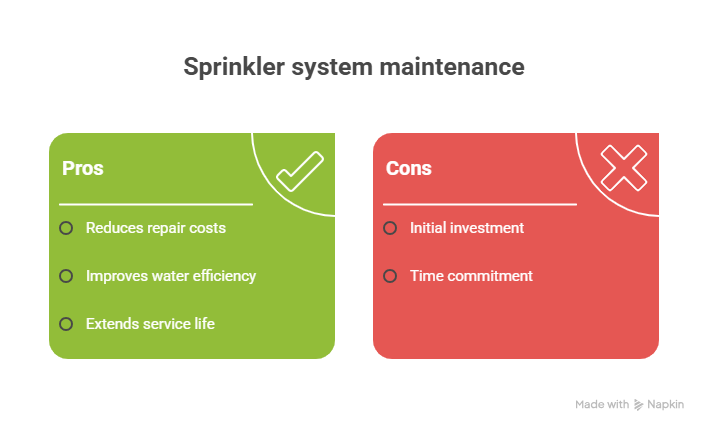
Maintenance Benefits
Reduces repair costs.
Prevents sudden system failure.
Improves overall water efficiency.
Extends service life of the sprinkler system.
Conclusion
3–4 inch sprinkler couplers are essential for irrigation, landscaping, and fire systems. Choosing the right type improves water flow and reduces waste. Compliance with standards ensures safety and durability.
Fortis Forge, with advanced manufacturing and quality checks, provides reliable couplers for global markets. By selecting high-quality couplers and maintaining them, users save costs and achieve long-term performance.
Investing in the right sprinkler couplers strengthens the backbone of any water distribution system.